

Complete Garden Care Guide 2026: Best Steps, Tools, and Seasonal Schedule
A well-maintained garden doesn't happen by accident — it happens through the right tools used at the right time. Whether you're tending a small backyard, a vegetable patch, or a full lawn-and-landscape setup, this guide covers everything you need to know: the essential hand tools, the smart technology worth investing in, and a seasonal schedule that actually works.
Why Timing Beats Products Every Time
The biggest mistake most gardeners make isn't using the wrong products — it's using the right products at the wrong time. University research consistently shows that lawns following a calendar-driven program (with fall as the primary fertilization window for cool-season grasses) show 30–45% better density gains than lawns running spring-heavy fertilization schedules. Same products, same total nitrogen budget — different timing, materially different results.
The second most common mistake: buying tools without assessing actual needs. A solo homeowner managing a quarter-acre doesn't need the same setup as someone managing a full property. Start with the essentials, then expand.
Part 1: The Essential Hand Tools Every Gardener Needs
1. Pruning Shears — Your Most-Used Tool
Good pruning shears (also called secateurs) are the foundation of any garden toolkit. You'll use them for deadheading flowers, trimming shrubs, harvesting vegetables, and shaping hedges throughout the growing season.
What to look for:
- Bypass blades (two curved blades that pass each other) over anvil blades (one blade striking a flat surface) — bypass makes cleaner cuts that heal faster and cause less plant damage
- Ergonomic handles with rubber grip padding — you'll be squeezing these hundreds of times per session
- Stainless or carbon steel blades with a channel coating to resist sap buildup
Top pick 2026: Felco 2 Manual Pruning Shears — Swiss-made, rated 5/5 for comfort, performance, durability and value in independent testing. A professional-grade favorite that lasts decades with blade sharpening and part replacement.
Budget pick: Gardener's Friend Ratchet Pruning Shears — three-stage ratchet system reduces hand effort by up to 70%, excellent for gardeners with arthritis or limited grip strength.
2. Spade — For Planting, Digging, and Bed Creation
A quality spade handles soil turning, planting trees and shrubs, creating new beds, and edging borders. The difference between a cheap spade and a quality one becomes obvious after an hour of digging.
What to look for:
- Stainless steel blade — resists rust and slides through soil more easily than carbon steel
- Fiberglass or ash wood handle — fiberglass is more durable; ash wood absorbs vibration better
- Tread at the top of the blade for foot pressure without discomfort
- D-handle or T-handle depending on your preference
Key use case: Digging planting holes, turning compost into beds, creating clean lawn edges against borders.
3. Garden Fork (Digging Fork)
Where the spade cuts, the fork aerates. Garden forks break up compacted soil, turn compost, and lift root vegetables without slicing them. The best forks work on both packed and loose soil.
Top pick 2026: Tabor Tools Digging Fork — standout performer in independent tests for its ability to break up compacted clay while working effectively in loose garden beds. The balance between tine flexibility and rigidity is notably well-calibrated.
4. Garden Rake
The rake is underappreciated until you need it. For leveling seedbeds, gathering leaves, clearing debris, and spreading compost, nothing replaces it. Choose a bow rake (rigid tines for soil work) over a leaf rake if you're only buying one.
Key uses: Leveling soil before seeding, working amendments into the surface, clearing thatch, gathering debris after mowing or pruning.
5. Hoe or Cultivator
A hoe disrupts weed seedlings before they establish, aerates surface soil, and creates seed furrows. Used consistently, it's the most effective weed prevention tool available — far more efficient than pulling weeds after they've rooted.
The technique that matters: Hoe when the soil surface is dry and weeds are small. You're slicing the roots just below the surface, not pulling. Hoeing in wet conditions or after weeds have established is much less effective.
6. Trowel — The Hand Tool for Close Work
For transplanting seedlings, planting bulbs, and working in containers, a hand trowel is essential. Buy a quality one — cheap trowels bend at the joint between blade and handle under minimal pressure.
What separates a good trowel: One-piece stainless steel construction (no joint to break), depth markings on the blade (useful for consistent bulb planting), comfortable grip.
7. Stand-Up Weeder
For lawns and paths, a stand-up weeder removes tap-rooted weeds like dandelions without kneeling or using chemicals. The Fiskars Stand-Up Weeder is the consistent top performer — it reliably pulls weeds out by the roots in independent testing, reducing re-sprouting significantly compared to hand-pulling.
8. Compost Tumbler
Composting converts kitchen and garden waste into the single most valuable soil amendment available. A tumbler accelerates decomposition compared to a static pile by maintaining heat and making turning easy.
Top pick 2026: Maze Compost Tumbler — 65-gallon dual-chamber design (allowing a second batch to start while the first finishes), gear-driven hand crank that manages even a full load, 15-inch ground clearance for easy unloading. The dual-chamber design is the feature worth paying for.
Part 2: Power and Cordless Tools
9. Cordless String Trimmer / Edger Combo
For anything near fences, trees, or hardscaping where a mower can't reach, a string trimmer is essential. The best 2026 option converts between trimmer and wheeled edger — handling both functions with one battery.
Top pick 2026: Black+Decker 20V Max String Trimmer/Edger — part of the 20V Max Power Connect system (battery compatible with dozens of other Black+Decker tools), EasyFeed automatic line advance, simple conversion between trimmer and edger modes. Starting at $119.
What to prioritize: Battery compatibility across your tool ecosystem. Buying into a single battery platform (DeWalt 20V Max, Milwaukee M18, EGO 56V) means one charger and interchangeable batteries across your entire toolkit.
10. Robotic Lawn Mower
The most significant shift in residential lawn care in 2026 is the mainstream adoption of boundary-wire-free robotic mowers using GPS and AI navigation. Previous generations required burying perimeter wire — a multi-hour installation that many homeowners avoided. 2026 models use RTK-GPS and AI vision to navigate without wire.
How they work: Set the mowing zones via app, schedule frequency, and let it run. Modern robots detect and avoid pets, toys, and garden furniture using ultrasonic sensors. They connect to smart irrigation systems to avoid mowing on wet soil.
Top picks 2026:
- MAMMOTION LUBA 3 AWD — Tri-Fusion Navigation System (360° LiDAR + NetRTK + AI vision), handles slopes up to 35°, no boundary wire required. Best for complex yards with obstacles and slope variation.
- Husqvarna Automower 430X — industry standard for reliability, handles slopes up to 45%, Automower Connect app with ultrasonic sensors for obstacle detection. Best for larger properties prioritizing reliability over cutting-edge tech.
The economics: A mid-range robotic mower ($800–$1,500) pays for itself within 2–4 years versus weekly mowing service, and eliminates the time cost entirely.
Part 3: Smart Garden Technology
11. Smart Irrigation Controller — The Highest-ROI Smart Garden Purchase
Smart irrigation controllers prevent the two most common watering mistakes: overwatering (which promotes root disease and wastes water) and underwatering (which stresses plants and increases vulnerability to drought damage). They adjust schedules dynamically based on real-time weather data, reducing water usage by up to 50% compared to fixed-timer systems.
Top pick 2026: Rachio 3 Smart Sprinkler Controller ($150–$230) — rated 9.0/10 in independent testing. Weather Intelligence uses local weather data, satellite imagery, and forecasts to adjust watering automatically. Features weather skip, seasonal shift, flow monitoring, and soil type calibration. Integrates with Alexa, Google Home, and Apple HomeKit. The gold standard.
Budget pick: Orbit B-hyve ($55–$100) — 8-zone WiFi model with weather-based adjustments and EPA WaterSense certification. Covers the core functionality at roughly half the price.
If you don't have an in-ground system: Orbit B-hyve hose faucet timer ($35) brings smart scheduling to any outdoor spigot — the easiest entry point into smart irrigation.
12. Soil Moisture Sensors
Soil sensors tell you exactly how much moisture is in the root zone before you water — eliminating guesswork entirely. Different plants have different optimal ranges: succulents thrive below 20% moisture, tomatoes need 40–60%, ferns prefer 60–80%.
How to use them effectively: Place the sensor at root depth (not surface level), set moisture thresholds for each zone, and let the sensor trigger irrigation automatically rather than on a fixed schedule.
Integration note: Soil sensors that connect to your Rachio or Orbit irrigation controller create a fully automated watering system — the controller checks the sensor reading before any scheduled watering cycle and skips it if moisture is adequate.
13. Soil Testing Kit
Most fertilizer application is either unnecessary or incorrectly targeted because homeowners don't know their actual soil conditions. A soil test tells you pH level and the specific nutrient deficiencies present — allowing you to apply exactly what's needed rather than broadcasting a generic blend.
Top pick 2026: MySoil Test Kit — mail-in service that provides professional-grade analysis. In independent testing, results matched university lab analysis nearly identically. The report arrives via email within 6 days showing nutrient levels against optimal ranges. One test per year is sufficient for most home gardens.
Why pH matters most: Soil pH determines nutrient availability regardless of what you apply. Grass growing in soil with pH below 6.0 can't absorb nitrogen efficiently — fertilizing without addressing pH delivers diminishing returns.
14. Rain Gauge with Smart Features
The AcuRite Wireless Digital Rain Gauge tracks actual rainfall at your property — not regional average estimates. Connecting rainfall data to your irrigation controller prevents watering cycles immediately after rain and ensures your irrigation decisions are based on what actually fell in your yard, not a weather station two miles away.
Part 4: The Seasonal Garden Care Schedule
Spring (March–May): Preparation and Growth Activation
Spring is about preparing for the growing season, not fertilizing aggressively.
Soil work:
- Test soil pH and nutrient levels before applying any amendments
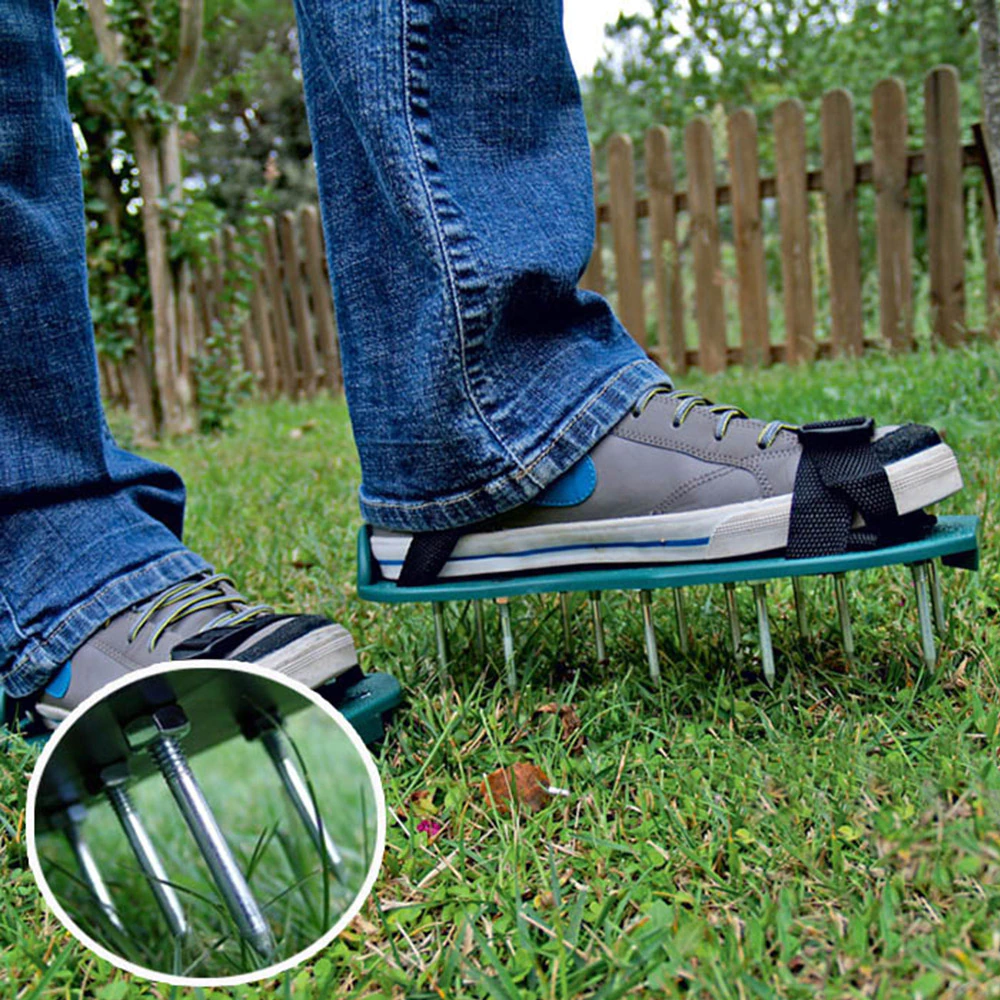
- Aerate compacted areas — use a core aerator (removes plugs) rather than a spike aerator (compresses rather than relieves compaction)
- Apply lime if pH is below 6.0 for cool-season grasses (6.0–7.0 is the target range)
Lawn care:
- Apply pre-emergent herbicide when soil temperature reaches 50–55°F at 4-inch depth — this is the critical timing window for preventing crabgrass. Too early and it breaks down before weed seeds germinate; too late and it's ineffective
- First mowing at proper height: 3–3.5 inches for cool-season grasses (Kentucky Bluegrass, Tall Fescue, Perennial Ryegrass), 2–2.5 inches for warm-season grasses (Bermuda, Zoysia, St. Augustine)
- Light fertilization (0.5–0.75 lb nitrogen per 1,000 sq ft) for cool-season grasses — spring is not the primary fertilization window
Garden beds:
- Remove winter mulch once nighttime temperatures stay above freezing
- Add 2–3 inches of fresh compost to beds — work in lightly with a fork
- Prune dead wood from shrubs and perennials once new growth appears
- Divide overcrowded perennials before active growth begins
Planting:
- Start warm-season seeds indoors 6–8 weeks before last frost date
- Plant cool-season vegetables (lettuce, spinach, peas, kale) directly outdoors once soil is workable
- Plant bare-root trees and shrubs before leaf-out
Summer (June–August): Maintenance and Stress Management
Summer is about protecting your lawn and garden from heat stress — not pushing growth.
Lawn care:
- Raise mowing height for cool-season grasses to 3.5–4 inches in June — taller grass shades the soil and reduces surface temperature by up to 15°F
- Water deeply and infrequently: 1–1.5 inches, 2–3 times per week. Daily light watering keeps roots shallow and heat-vulnerable. Deep watering encourages deep root development that improves drought resilience
- Do NOT fertilize cool-season grasses in July — they may go dormant in heat, which is normal survival behavior. Applying nitrogen to a dormant cool-season lawn stresses rather than helps it
- Warm-season grasses (Bermuda, Zoysia) hit peak growth in summer — fertilize every 4–6 weeks through August (0.75–1 lb nitrogen per 1,000 sq ft)
Pest and disease monitoring:
- Brown patch and dollar spot peak in humid summer nights — reduce evening irrigation as a first defense before reaching for fungicide
- Monitor for chinch bugs in warm-season lawns, particularly Bermuda and St. Augustine
- Inspect plants weekly for aphids, spider mites, and Japanese beetles — early intervention prevents infestation
Garden care:
- Mulch beds with 2–3 inches of organic mulch to retain moisture and suppress weeds
- Deadhead flowers regularly to extend bloom season
- Water deeply at the base of plants — overhead watering in summer promotes fungal disease and wastes water to evaporation
- Harvest vegetables frequently to maintain plant productivity
Fall (September–November): The Most Important Lawn Season
Fall is the most critical time of year for cool-season lawns — and the most neglected.
Why fall matters most for cool-season grass: Soil temperatures are cooling but still warm enough for root development. Above-ground growth slows, so energy goes into root establishment. Applications made now carry through winter dormancy and produce the most visible results the following spring.
Lawn care:
- Primary fertilization window: Apply 1–1.5 lb nitrogen per 1,000 sq ft in September–October for cool-season grasses. This is the application that builds density and root depth — far more impactful than spring fertilization
- Overseeding bare or thin areas: September is optimal — soil is warm, air is cool, and reduced competition from warm-season weeds means higher germination rates. Aerate first, then overseed
- Apply broadleaf herbicide for persistent weeds (dandelion, clover, plantain) — fall applications are more effective than spring because weeds are pulling resources toward roots for winter storage
- Continue mowing until the grass stops growing — don't cut it short for winter. Leave cool-season grasses at 2.5–3 inches going into dormancy
Garden beds:
- Plant spring-blooming bulbs (tulips, daffodils, alliums) 6–8 weeks before first frost
- Cut back perennials after frost — or leave seed heads through winter for bird habitat and visual interest
- Apply 3–4 inches of mulch over beds after the ground has frozen lightly — this moderates freeze-thaw cycles rather than preventing freezing
Winter (December–February): Planning and Equipment Maintenance
Winter is planning season, not neglect season.
Equipment maintenance:
- Drain and properly store gas-powered equipment — stale fuel is the most common cause of spring starting failures
- Sharpen mower blades, pruning shears, and spade edges — dull tools damage plants and increase effort
- Clean and dry all metal tools before storage to prevent rust
- Service the irrigation system — drain lines completely in cold climates to prevent pipe damage
Planning:
- Order seeds for spring in January–February — popular varieties sell out early
- Review last year's garden notes (what worked, what didn't, where bare spots appeared)
- Place soil test kit orders — testing in February allows amendments to be applied at optimal spring timing
- Research pre-emergent timing for your specific USDA hardiness zone to plan spring applications accurately
Part 5: The Smart Garden Setup Guide
For gardeners looking to automate and optimize, here's the recommended build order for a smart garden setup:
Step 1 — Soil sensor ($35–$80): The foundation. Understanding actual soil conditions before buying products or scheduling irrigation is the single highest-leverage change most gardeners can make. Start here.
Step 2 — Smart irrigation controller ($55–$230): Connect to your existing irrigation system or hose timer. Configure zones, connect to weather data, integrate soil sensor if available.
Step 3 — Soil test ($25–$40 one-time): MySoil or similar. Know your pH and nutrient profile before applying any amendments.
Step 4 — Robotic mower ($800–$1,500): Once the soil and irrigation are sorted, automate mowing. Modern boundary-wire-free models require minimal setup and maintenance.
Step 5 — Smart connectivity: Connect devices through Google Home, Amazon Alexa, or Apple HomeKit. IFTTT can bridge devices from different ecosystems if needed.
A complete basic setup (soil sensor + smart hose timer + soil test) costs under $150 and eliminates the most common garden care failures. The payoff in plant health and water savings typically covers the investment within one season.
The Bottom Line: What to Buy First
Absolute essentials (under $200 total):
- Felco 2 or bypass pruning shears — $30–$50
- Quality spade — $40–$70
- Hand trowel — $15–$25
- Hoe or cultivator — $20–$40
- MySoil test kit — $25 (do this before anything else)
High-impact additions:
- Rachio 3 smart irrigation controller — $150–$230
- Fiskars stand-up weeder — $35
- Soil moisture sensor — $35–$80
- Maze compost tumbler — $120–$180
When you're ready to level up:
- Robotic mower (MAMMOTION LUBA 3 or Husqvarna Automower) — $800–$1,500
- Battery-powered string trimmer/edger combo — $100–$200
- Rain gauge with smart integration — $40–$70
The garden that consistently looks effortless isn't managed with more effort — it's managed with better tools used at the right time. A soil test, a smart irrigation controller, and a seasonal schedule will outperform any amount of guessing with premium products.