

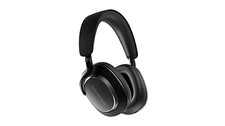


Best Wireless Headphones 2026: What Actually Sounds Good
By the WhatNotSell team · Updated Price ranges in this guide are typical prices as of the date above and change often. The live prices on this page are current.
Wireless headphones have never been better — or more confusing to buy. The market spans $30 earbuds and $400 over-ear cans, and the price doesn't always predict the performance. This guide cuts through the marketing to focus on what actually matters: sound quality, battery life, comfort, and noise cancellation that works.
Quick Picks: Best Wireless Headphones at a Glance
| Model | Best For | Battery Life | Price Range |
|---|---|---|---|
| Sony WH-1000XM6 | Best overall | 30 hrs | $399–$459 |
| Bose QuietComfort Ultra (2nd Gen) | Best comfort | 30 hrs | $399–$449 |
| Apple AirPods Max 2 | Best for Apple users | 20 hrs | $549 |
| Soundcore Space One | Best budget | 40 hrs | $79–$99 |
| Jabra Evolve2 55 | Best for calls | 34 hrs | $299–$379 |
| Sony WH-1000XM5 | Best value flagship | 30 hrs | Often discounted |
What Separates Good Wireless Headphones From Great Ones
Sound Quality: What the Specs Don't Tell You
Frequency response graphs and driver sizes tell you very little about how headphones actually sound. What matters is tuning — how the manufacturer has shaped the sound signature. Most consumer headphones boost bass and treble (a "V-shaped" tuning) because it sounds impressive on first listen. Neutral tuning sounds less exciting out of the box but is more accurate and less fatiguing over long sessions.
The best headphones offer EQ customization via app, which lets you adjust the sound signature to your preference regardless of the default tuning.
Active Noise Cancellation: The Real Difference
Not all ANC is equal. Entry-level ANC reduces steady-state noise (airplane engines, AC hum) but struggles with variable noise (voices, traffic). Premium ANC handles both. Sony and Bose lead the category — their flagship models genuinely isolate you from your environment in ways that cheaper alternatives cannot replicate.
Key ANC features to look for:
- Transparency/ambient mode — lets in environmental sound without removing headphones
- Wind noise reduction — important for outdoor use
- Adaptive ANC — automatically adjusts based on environment
Battery Life: What's Enough
For daily commuters: 20–25 hours is sufficient. For frequent travelers or all-day office use: 30+ hours. Fast charging is increasingly important — the ability to get 3–5 hours of playback from a 10-minute charge is genuinely useful.
Our Top 6 Wireless Headphones
1. Sony WH-1000XM6 — Best Overall
Sony's WH-1000XM6 (released May 2025) is the headphone most reviewers now rank first. Compared with its main rival, the Bose QuietComfort Ultra (2nd Gen), it has slightly stronger noise cancellation, longer battery life and more sound customization. It lists at $459 but is regularly discounted to around $400.
What works well:
- Class-leading noise cancellation for varied environments: offices, streets, flights
- Deep sound customization through Sony's app
- Longer battery life than the Bose QC Ultra (2nd Gen)
- Multipoint connection and Sony's smart features (Speak-to-Chat, adaptive sound)
What to know:
- Bose is more comfortable for very long wear
- At full price it's one of the most expensive options here, so wait for a sale
Best price timing: Sony discounts the XM6 regularly; around $400 is a good price.
2. Bose QuietComfort Ultra (2nd Gen) — Best Comfort
Bose replaced the QC45 line, and the QuietComfort Ultra (2nd Gen) (released September 2025, $449) is its current flagship. Reviewers consistently rate it the more comfortable of the two top flagships, with the most natural-sounding transparency mode, and it supports lossless audio over USB-C. See our Sony XM6 vs Bose QC Ultra comparison for the full head-to-head.
What works well:
- The most comfortable flagship for all-day and long-flight wear
- Excellent noise cancellation, close to Sony's
- Natural transparency (Aware) mode
- Lossless audio over USB-C
What to know:
- Slightly less sound customization and battery life than the Sony XM6
- $449 list price, so it's worth waiting for a discount
Best price timing: Bose's deepest discounts arrive around Black Friday.
3. Apple AirPods Max 2 — Best for Apple Users
AirPods Max 2 launched in April 2026 at $549, bringing Apple's H2 chip and its improved computational audio to the over-ear design. For iPhone, iPad and Mac users, the seamless switching and Apple features are the reason to buy. For anyone else, the Sony and Bose flagships offer similar noise cancellation for less. Comparing Apple's headphones with Beats? See our AirPods vs Beats comparison.
What works well:
- H2 chip features and seamless switching across Apple devices
- Premium build and excellent noise cancellation
- Spatial audio with head tracking
What to know:
- $549 is the most expensive pick here
- Most of the advantages disappear on Android
Best price timing: Apple rarely discounts; retailers occasionally do, mostly around major sales.
4. Soundcore Space One — Best Budget
The Soundcore Space One (about $99, often less on sale) is widely rated the best noise-canceling headphone under $100. You get adaptive noise cancellation, very long battery life, LDAC hi-res audio support and multipoint connection at a fraction of flagship prices.
What works well:
- Strong adaptive noise cancellation for the price
- Up to 40 hours with ANC on (55 hours off)
- LDAC codec support and multipoint connection
- Comfortable, well-built for a budget pair
What to know:
- Noise cancellation and sound are good, not flagship-level
- Call quality trails the premium picks
Best price timing: often drops below $80 during Amazon sales.
5. Jabra Evolve2 55 — Best for Calls
Designed for professional use, the Jabra Evolve2 55 prioritizes call quality above all else. The 8-microphone array with AI-powered noise reduction ensures your voice is clear regardless of background noise. The ANC is outstanding — specifically tuned to block office noise. The 34-hour battery handles full work weeks. If your primary use is video calls and conference calls, this is the category leader.
What works well:
- 8 microphones with professional-grade call quality
- ANC specifically tuned for open offices
- 34-hour battery with fast charging
- Certified for Microsoft Teams, Google Meet, and Zoom
- Comfortable for all-day wear
What to know:
- The professional focus means the sound signature isn't optimized for music
- More expensive than consumer alternatives with similar ANC
- Less portable than consumer headphones
Best price timing: Prices are more stable than consumer headphones. Watch for end-of-quarter business deals or B2B promotions.
6. Sony WH-1000XM5 — Best Value Flagship
With the XM6 now Sony's flagship, the WH-1000XM5 has become the value pick. You get 30-hour battery life, an 8-microphone array for excellent calls, LDAC support, Speak-to-Chat and adaptive noise cancellation, often for well under the XM6's price. See our Sony XM5 vs Bose QC45 comparison for the full breakdown.
What works well:
- Still-excellent noise cancellation and sound
- 30 hours of battery life and excellent call quality
- Frequently discounted now that the XM6 is out
What to know:
- Doesn't fold flat
- Check the listing says new, not refurbished, as stock thins out
How to Choose the Right Wireless Headphones
Over-Ear vs On-Ear vs In-Ear
Over-ear (circumaural): Earcups fully surround the ear. Best for: sound isolation, sound quality, long wear comfort, ANC performance. Worst for: portability, working out.
On-ear (supra-aural): Earcups rest on the ear. Best for: portability, lighter weight. Worst for: extended wear (pressure on ears), sound isolation.
In-ear (true wireless earbuds): Fit inside the ear canal. Best for: portability, exercise, convenience. Worst for: extended wear, bass performance.
Codec Support: Does It Matter?
Most users won't hear a difference between SBC (standard Bluetooth), AAC (Apple devices), and aptX. The differences are audible only on high-quality audio files through high-quality headphones, and only with trained listening. For streaming services and everyday use, codec differences are negligible.
The Multipoint Connection Advantage
Multipoint allows one pair of headphones to connect to two devices simultaneously — your laptop and phone, for example. When a call comes in on your phone, it automatically switches. This is genuinely useful for anyone who moves between devices throughout the day. Most premium headphones now support it; budget options often don't.
When Do Wireless Headphones Go on Sale?
- Prime Day (July): Sony, Anker, and Jabra typically run deepest discounts
- Black Friday / Cyber Monday: All brands discount — Bose and Apple discounts appear here
- Back to School (August–September): Moderate promotions on student-friendly models
- Post-holiday clearance (January): Prior-year models see significant price drops
Wireless Headphones FAQ
How long do wireless headphones last?
Battery lifespan degrades over time — most headphones lose 10–20% of battery capacity after 300–500 charge cycles (1–2 years of daily use). The headphones themselves typically last 3–5 years with normal use. The first component to fail is usually the earcup padding, which can often be replaced.
Can I use wireless headphones with no battery?
Most over-ear wireless headphones include a 3.5mm cable that allows wired use when the battery is dead. True wireless earbuds do not — they stop working when the battery dies. Check for wired compatibility if this matters to you.
Are expensive headphones worth it?
For noise cancellation: yes, the performance difference between $50 and $300 ANC is significant and audible. For sound quality alone: the improvement from $100 to $300 is real but smaller — most users won't notice. The sweet spot for most users is $150–$250, where you get good ANC and sound quality without the premium pricing of flagship models.
How important is the companion app?
Very important. App features like EQ customization, ANC intensity adjustment, and firmware updates significantly affect the experience. Sony and Jabra have the most capable apps. Bose's app is solid. Cheaper options have simpler apps with fewer features.
Final Recommendation
For most users: Sony WH-1000XM6, the best combination of noise cancellation, sound and features. Around $400 on sale is a good price.
For comfort-first users: Bose QuietComfort Ultra (2nd Gen), the most comfortable flagship for all-day wear.
For Apple users: AirPods Max 2, if you're fully in the Apple ecosystem and price isn't the main concern.
For budget shoppers: Soundcore Space One, the best noise cancellation under $100.
For value: Sony WH-1000XM5, last generation's flagship at a lower price.
For call-heavy professionals: Jabra Evolve2 55, the best call quality in a wireless headphone.
WhatNotSell tracks live prices on all wireless headphones listed above. Set a price alert before Prime Day to catch the deepest annual discounts on Sony and Bose models.